Musab
TravelPhotographyAbout
Musab

Websites, Automations & Content that deliver customers.

Navigation

  • Cases
  • Services
  • About
  • Photography
  • Travel

Services

  • Web Development
  • AI Automation
  • Photography

Start a project

Ready to grow? Schedule a free strategy call.

Contact

Change language

© 2026 Musab. Websites that deliver customers.

Privacy PolicyTerms of Service
field-notes

Kyrgyzstan: 14-Day Roadtrip

Peak season Field Notes. Practical info on permits, transport, budget and timing.

Kyrgyzstan
·
2 augustus 2025
·
22 min
Home
Travel
Kyrgyzstan
Kyrgyzstan: 14-Day Roadtrip

On this page

0 of 24 sections

Progress0%
TL;DR
Route Overview
When to Go? Timing & Seasons
Before You Go: Preparation
Is This Route for You?
What a Typical Day Looks Like
Day-by-Day Account
Day 1: Bishkek → Osh (same day return)
Day 2: Bishkek → Song-Kul
Day 3: Song-Kul (rest day)
Day 4: Song-Kul → Kel-Suu
Day 5: Kel-Suu (exploration day)
Day 6: Kel-Suu → Tash Rabat
Day 7: Tash Rabat → Bokonbaevo
Day 8: Bokonbaevo → Skazka Canyon → Jeti-Ögüz
Day 9: Jeti-Ögüz → Karakol → Altyn Arashan
Day 10: Altyn Arashan (rest day)
Day 11: Altyn Arashan → Karakol
Day 12: Karakol → Grigoriev Gorge → Cholpon-Ata
Day 13: Cholpon-Ata → Bishkek
Day 14: Departure (morning)
Practical Guide
Reflections: What I Learned
Closing
Kyrgyzstan: 14-Day Roadtrip & Practical Travel Guide

Trip type: Car + driver · Season: August (peak season) · My trip: 2–15 August 2025

There are countries you visit, and countries you enter. Kyrgyzstan falls into the second category. It's a country that doesn't let itself be consumed as a checklist. It demands presence, patience, and the willingness to let go of your plans when the mountains decide otherwise.

What follows is not a route description in the traditional sense. It's a collection of everything I wish I had known before I left: the practical decisions, the unexpected moments, and the quiet lessons you only learn by being there.


TL;DR
  • 14-day roadtrip through the heart of Kyrgyzstan
  • Car + driver → highly recommended (rest, safety, local knowledge)
  • Best period: June–September (peak season August)
  • Accommodation: yurts & guesthouses, often booked 1 day ahead via Instagram/WhatsApp
  • Cash is king; withdraw before entering remote areas
  • Horse riding is accessible - no experience needed, often possible without a guide
  • Flexibility is your greatest advantage (weather, energy, connectivity)
  • Altitude: Account for 3000m+ - build up slowly
  • Connectivity: Often no internet on the road - download everything in advance

This country gives you exactly what you need, if you're willing not to get what you want.


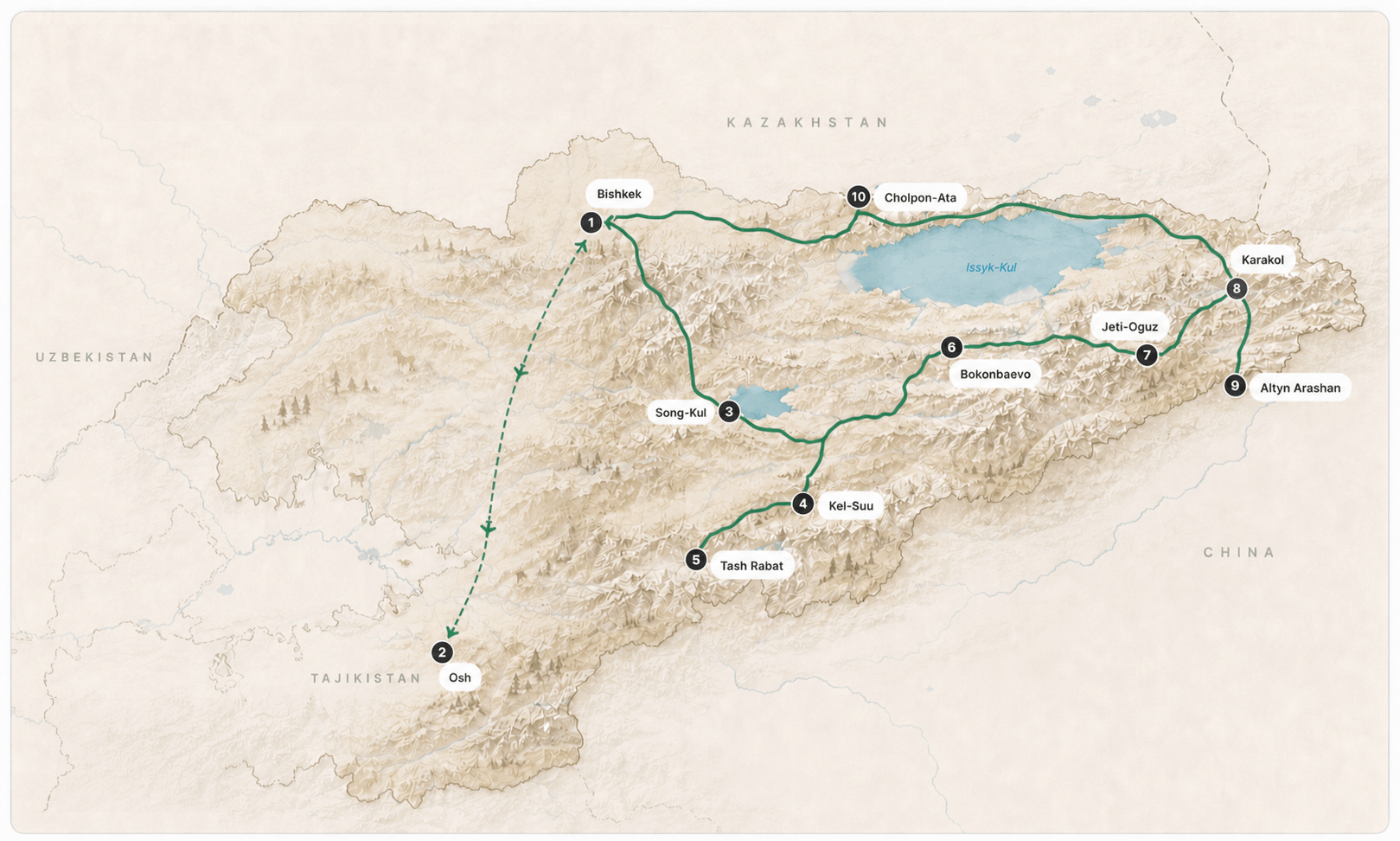
Route Overview
1

Bishkek

D1

Song-Kul

D2-3

Kel-Suu

D4-5

4

Tash Rabat

D6

5

Bokonbaevo

D7

6

Jeti-Ögüz

D8

Altyn Arashan

D9-10

8

Karakol

D11

9

Cholpon-Ata

D12

14

Bishkek

D13-14

HighlightTransit Stop|14 days · 10 stops · ±1800 km
1

Bishkek

Day 1

Starting point. Day trip to Osh (flight).

Song-Kul

6h
Day 2-3

Alpine lake at 3000m. Yurt stay, horse riding.

Kel-Suu

5h
Day 4-5

Turquoise glacier lake. Border permit required.

4

Tash Rabat

3h
Day 6

15th-century caravanserai on the Silk Road.

5

Bokonbaevo

7h
Day 7

Eagle hunters, Skazka Canyon en route.

6

Jeti-Ögüz

4h
Day 8

Red rock formations 'Seven Bulls'.

Altyn Arashan

4h
Day 9-10

Hot springs at 2600m. Rest day included.

8

Karakol

2h
Day 11

Last city, amenities.

9

Cholpon-Ata

4h
Day 12

Issyk-Kul north coast, beach.

14

Bishkek

4h
Day 13-14

Return to capital. Day 14 departure.

14

days

10

stops

3

Highlights


When to Go? Timing & Seasons

The information below is based on our experience in August 2025 and conversations with local guides. Prices, weather conditions and availability may vary by year and season.

Peak Season

Jul–Aug

Recommended
Advantages
  • All mountain passes open and routes accessible
  • Full yurt capacity, no closed camps
  • Ideal horse riding weather: dry and stable
  • Daylight until 21:00, more time for activities
Considerations
  • Popular spots busier (Song-Kul, Altyn Arashan)
  • 10–20% higher prices than shoulder season

The complete experience: mountains, lakes, yurts and horses

Peak Season

Jul–Aug

Recommended
Advantages
  • All mountain passes open and routes accessible
  • Full yurt capacity, no closed camps
  • Ideal horse riding weather: dry and stable
  • Daylight until 21:00, more time for activities
Considerations
  • Popular spots busier (Song-Kul, Altyn Arashan)
  • 10–20% higher prices than shoulder season

The complete experience: mountains, lakes, yurts and horses


Before You Go: Preparation
The Week Before Departure
  • Visa check - EU/US/UK citizens: 60 days visa-free
  • Banking - Set up Revolut/Wise, inform your bank about travel plans
  • Offline maps - Download 2GIS and Maps.me for all of Kyrgyzstan
  • eSIM order - Or plan to buy local SIM at airport (Beeline/O!)
  • Basic Russian - Download Google Translate offline (Russian + Kyrgyz)
  • First night accommodation - Only Bishkek, rest flexible
  • Driver contact - Introduce via WhatsApp, roughly align on route
What You Really Need

Essential

  • •Warm layers (nights at altitude: 5-10°C)
  • •Good hiking shoes (also usable for horse riding)
  • •Power bank 20,000+ mAh
  • •Cash (€300-500 in USD)
  • •Sunscreen SPF50 + sunglasses (altitude = more intense)
  • •Basic medication + stomach medicine

Underrated

  • •Earplugs (yurts are not soundproof)
  • •Sleep mask (early sunrise)
  • •Dry snacks for long drives
  • •Toilet paper (not always available)

Overrated

  • •Formal clothing (never needed)
  • •Laptop (unless you work)
  • •Too much clothing (laundry = possible in cities)

Is This Route for You?
This suits you if you:
  • enjoy traveling without a strict schedule
  • value peace and nature over "ticking off highlights"
  • are okay with simple accommodations (yurts/guesthouses)
  • can stay flexible with weather and energy
  • have no problem with limited connectivity on the road
  • are interested in nomadic culture
  • are willing to wake up early and sleep early
Less suitable if you:
  • expect luxury hotels every day
  • need stable Wi-Fi every evening
  • want to follow a schedule to the minute
  • get stressed from long drives and rougher roads
  • struggle with simple food (lots of bread, meat, potatoes)
  • can't handle cold (at night at altitude)

What a Typical Day Looks Like
06:30–07:30

Waking up. Not by an alarm, but by light filtering through the yurt roof, or the sound of horses outside. The silence is different from home. Fuller, somehow.

07:30–08:30

Breakfast. Freshly baked bread (lepyoshka), jam, kaymak (thick cream), eggs, tea. Always tea. The hostess refills without asking.

09:00–12:00

Driving or activity. The morning is the best time for everything. The light is soft, the temperature pleasant, your energy at its highest.

12:00–14:00

Lunch and rest. Often on the road or upon arrival at the new place. The sun is harsh at altitude; a break is needed.

14:00–18:00

Exploring. Hiking, horse riding, or simply watching. The landscape changes constantly with the light.

18:00–19:30

Dinner. Simple, warm, nutritious. No menu. You eat what's there.

20:00–21:00

Silence. No evening program, no entertainment. Talking, reading, looking at the stars, early to bed.

There's little "evening program." That's exactly why it feels real. Your rhythm is determined by the light, not by a schedule.


Day-by-Day Account

The following 14 days I'll take you through the route. Each day with practical tips, personal observations, and honest expectations.


Day 1: Bishkek → Osh (same day return)

My trip: August 2

The Beginning

After arriving in Bishkek early in the morning, we flew on the same day to Osh, the oldest city in Central Asia, with more than 3000 years of history.

This stop had personal significance. We visited a friend who lives in Osh, which immediately gave the day a different weight than a standard travel stop. But even apart from that, Osh is worth it: it feels fundamentally different from Bishkek. Slower, warmer (literally and figuratively), and with an Uzbek influence you taste in the food and see in the architecture.

Sulaiman-Too: The Sacred Mountain

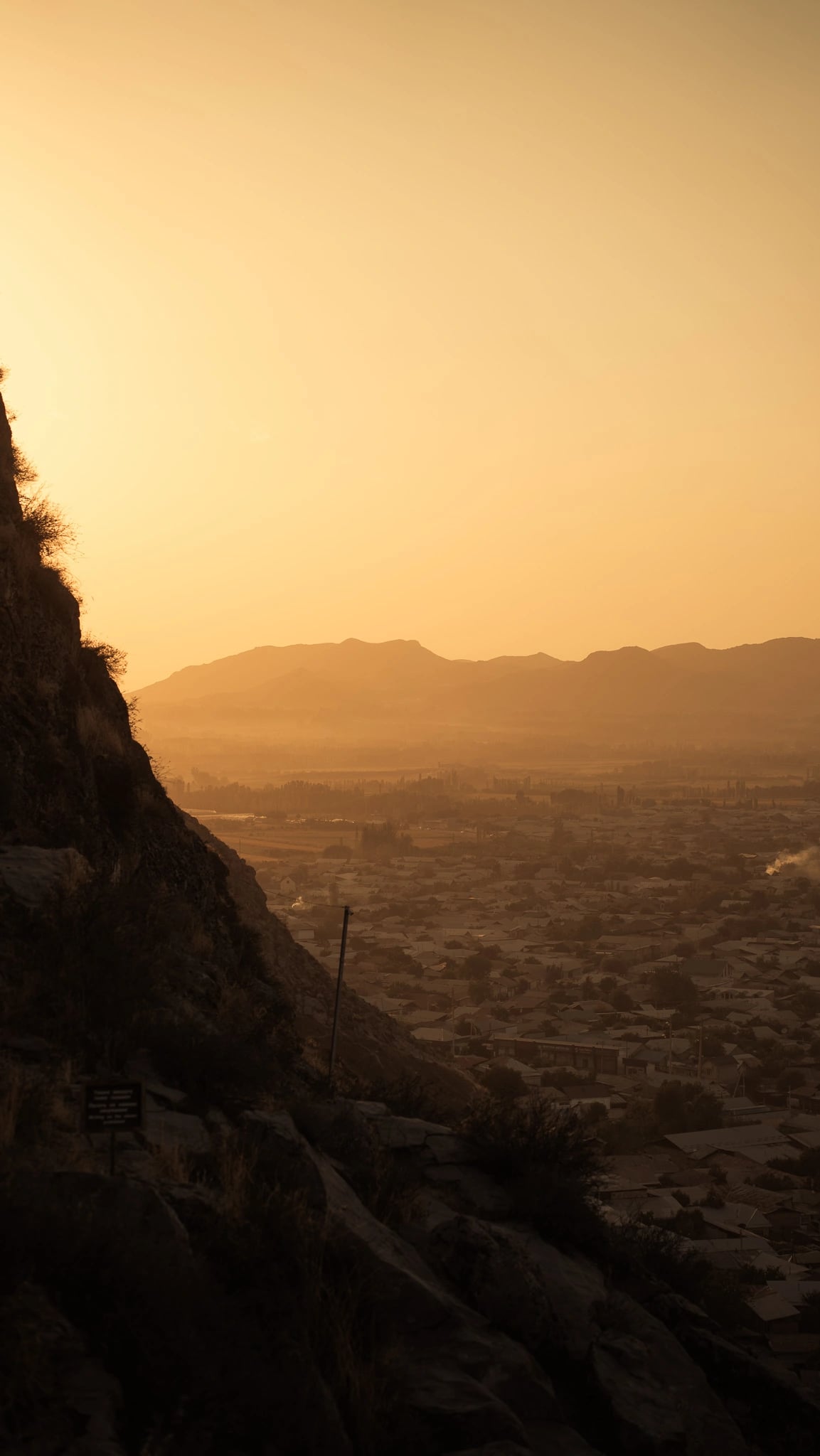
We visited Sulaiman-Too, the sacred mountain that has played a spiritual and cultural role in the region for centuries. UNESCO World Heritage since 2009. You can walk up via various routes. Along the way you see caves where people come to pray, and rock faces with petroglyphs that are thousands of years old.

At the top: views over the entire city. You understand why this place is sacred. The feeling of overview, of rising above the everyday world.

Golden sunset over Sulayman Too mountain
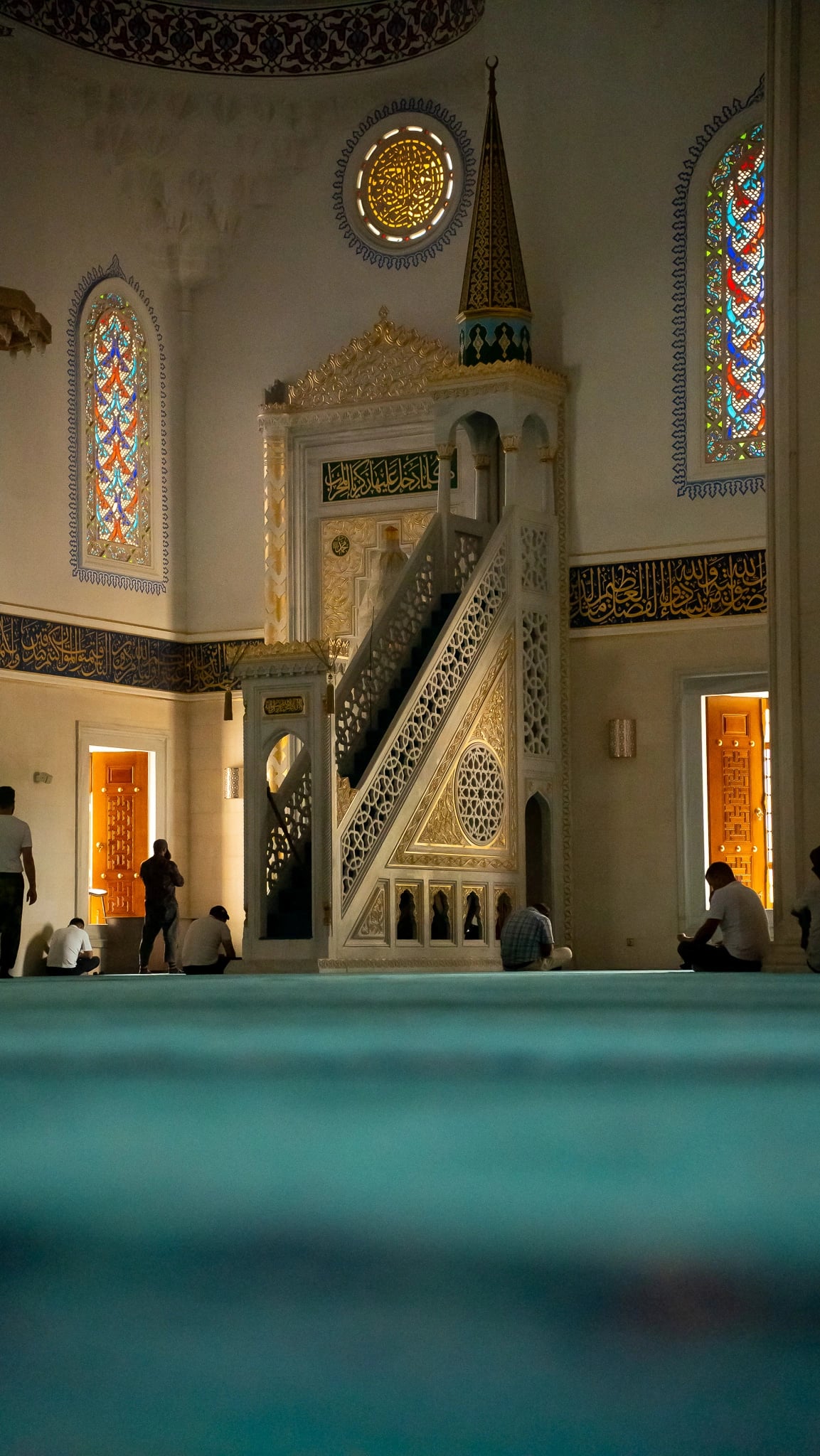
Historic Mevlana Siracuddin mosque
Osh
Spiritual Dimension

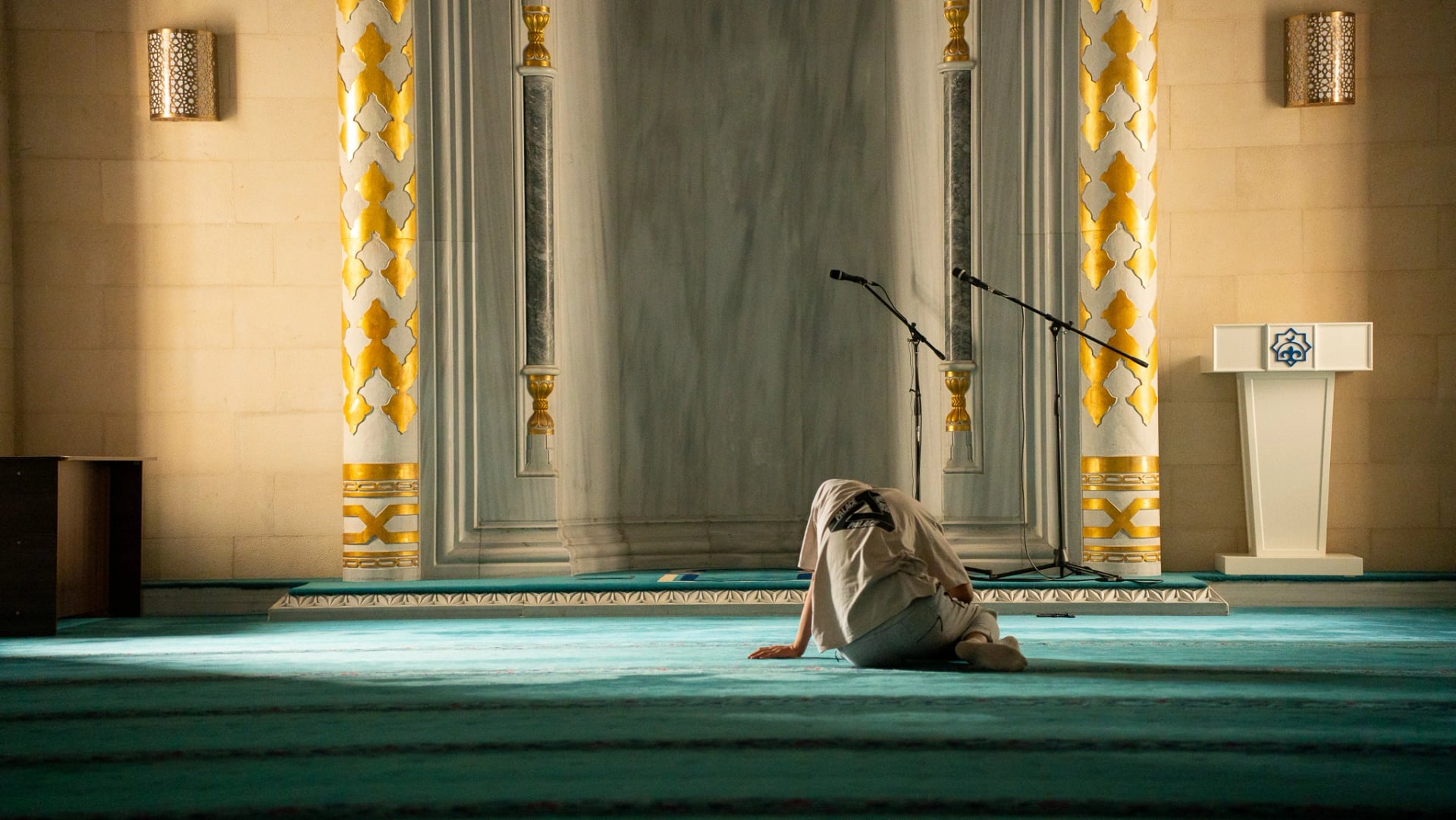
We also visited the cemetery of Şeyh Salahuddin İbn-i Mevlana Siracüddin (k.s.), a place of peace and reflection. These kinds of visits color a trip in a way that's hard to explain. It connects you to something bigger than tourism.

In the evening we returned to Bishkek.

Osh: Food & Atmosphere

If you have time in Osh:

  • Osh Bazaar - One of the largest in Central Asia. Spices, nuts, fabrics, everything. Go early.
  • Plov - The Uzbek rice dish. Osh claims the best plov in the region.
  • Samsa - Filled puff pastry pockets, fresh from the tandoor oven.

Why this day works

  • •Cultural/spiritual context at the start of the trip
  • •Osh feels different from Bishkek (pace, atmosphere, energy)
  • •You land in the country before heading into the mountains

Do

  • •Withdraw cash / arrange essentials in Bishkek before the flight
  • •Install Yandex for city rides
  • •Visit Sulaiman-Too at sunset if you have time

Avoid

  • •Trying to do "everything" in Osh (half a day is enough)
  • •Taking taxis without Yandex (price gouging)

Day 2: Bishkek → Song-Kul

My trip: August 3

The Transformation

The transition from city to open landscape is abrupt and impressive. You drive through increasingly narrow valleys, climb via hairpin turns, and somewhere along the way, without being able to pinpoint exactly when, everything changes.

The trees disappear. The air becomes thinner and clearer. The colors shift to shades of green and brown you don't know. And then, after a final pass, the landscape opens up and you see it: Song-Kul.

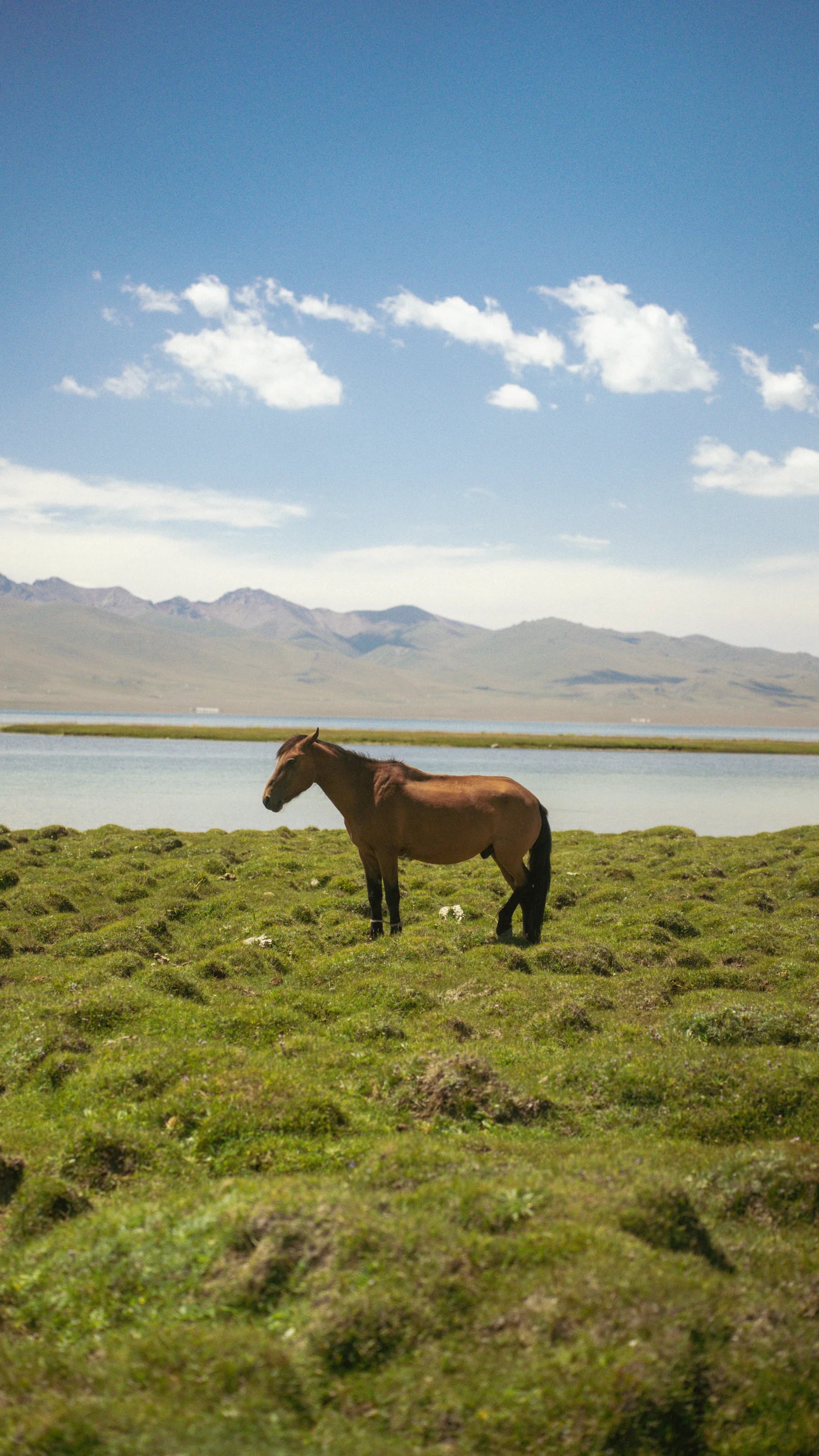
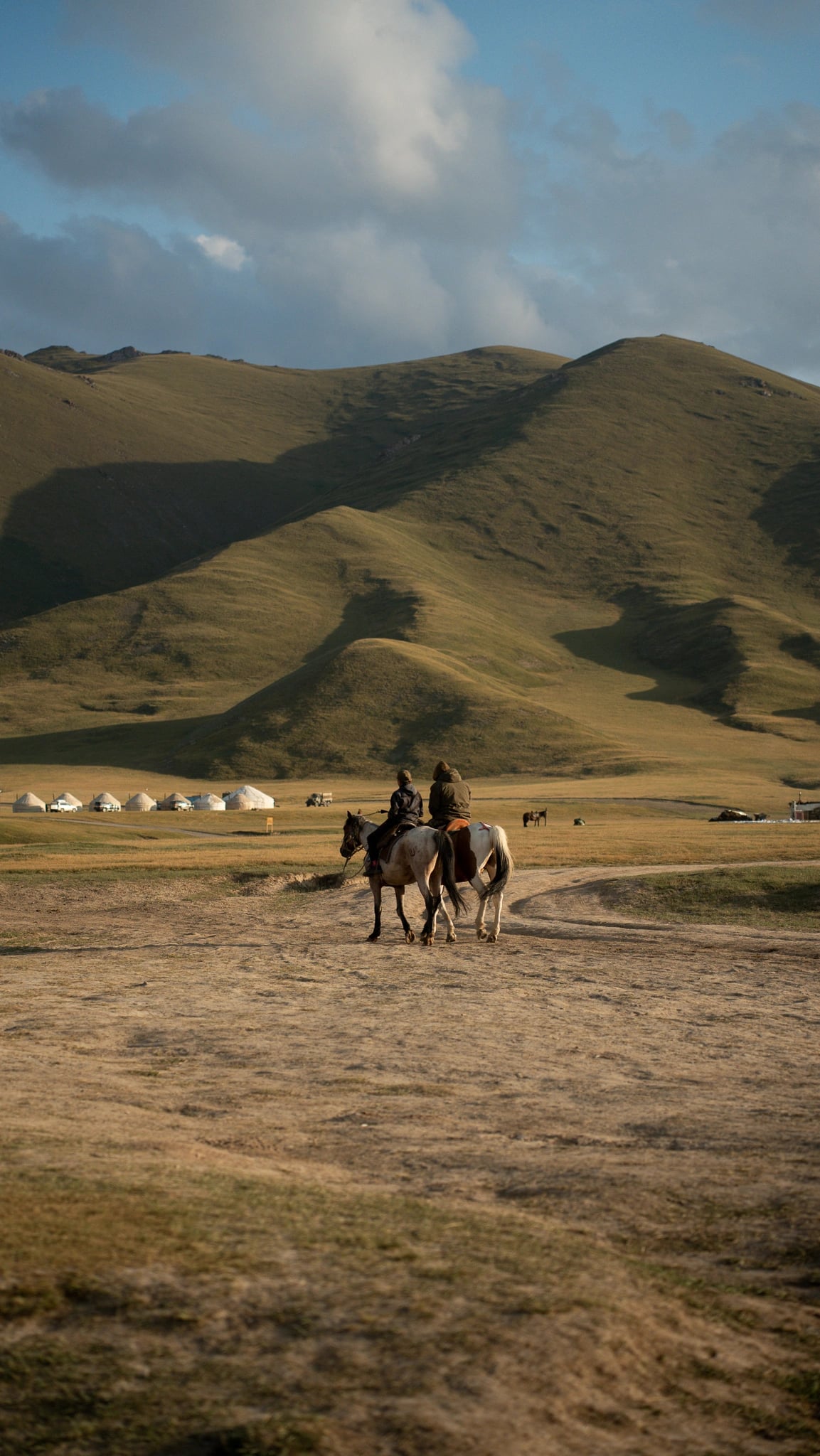
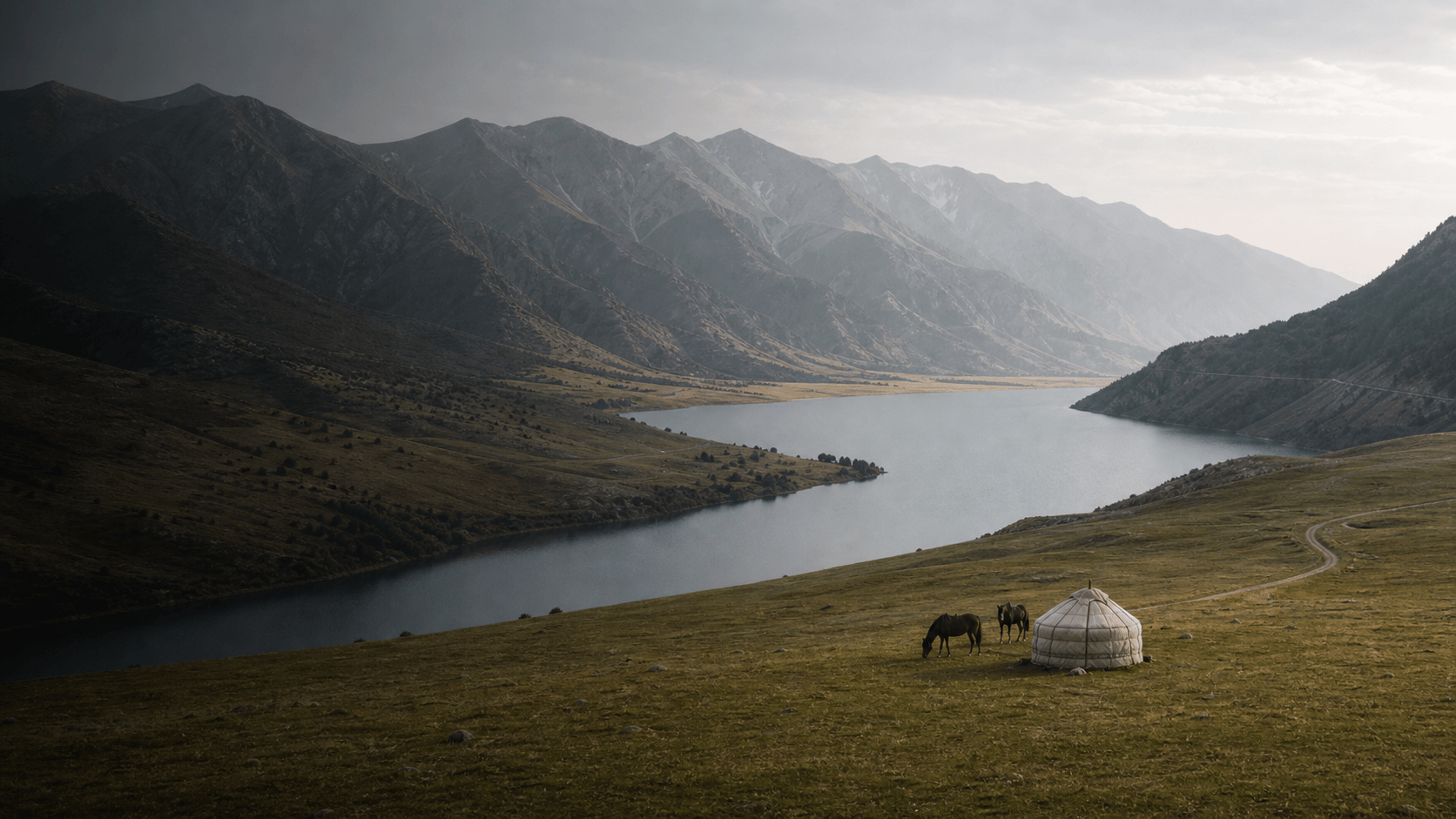
A lake at 3016 meters altitude, surrounded by rolling hills where yurts stand scattered like white dots. Horses graze freely. The wind is constant. The silence, despite the wind, is overwhelming.

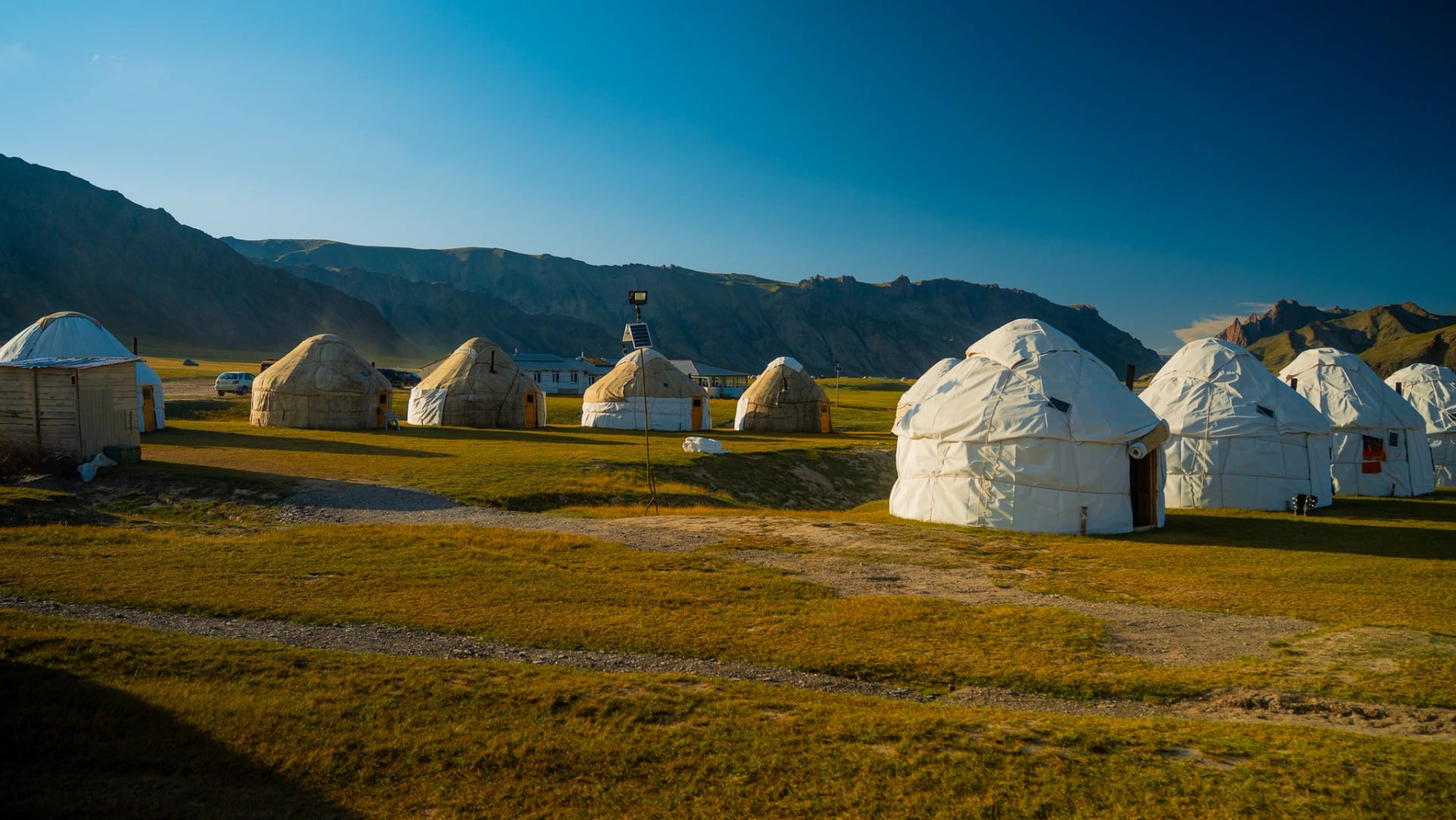
Traditional nomadic yurt against mountain landscape
Vast alpine meadows at Song-Kol
Song-Kol
Arrival at Altitude

The first hours at Song-Kul feel strange. You're tired from the journey, but it's more than that. At 3000 meters there's 30% less oxygen. Your body needs to adjust. Take it easy:

  • No heavy exertion on day 1
  • Drink lots of water
  • Short walk is fine, long hike is not
  • Headache or mild nausea is normal. Usually disappears within 24 hours
The Yurt

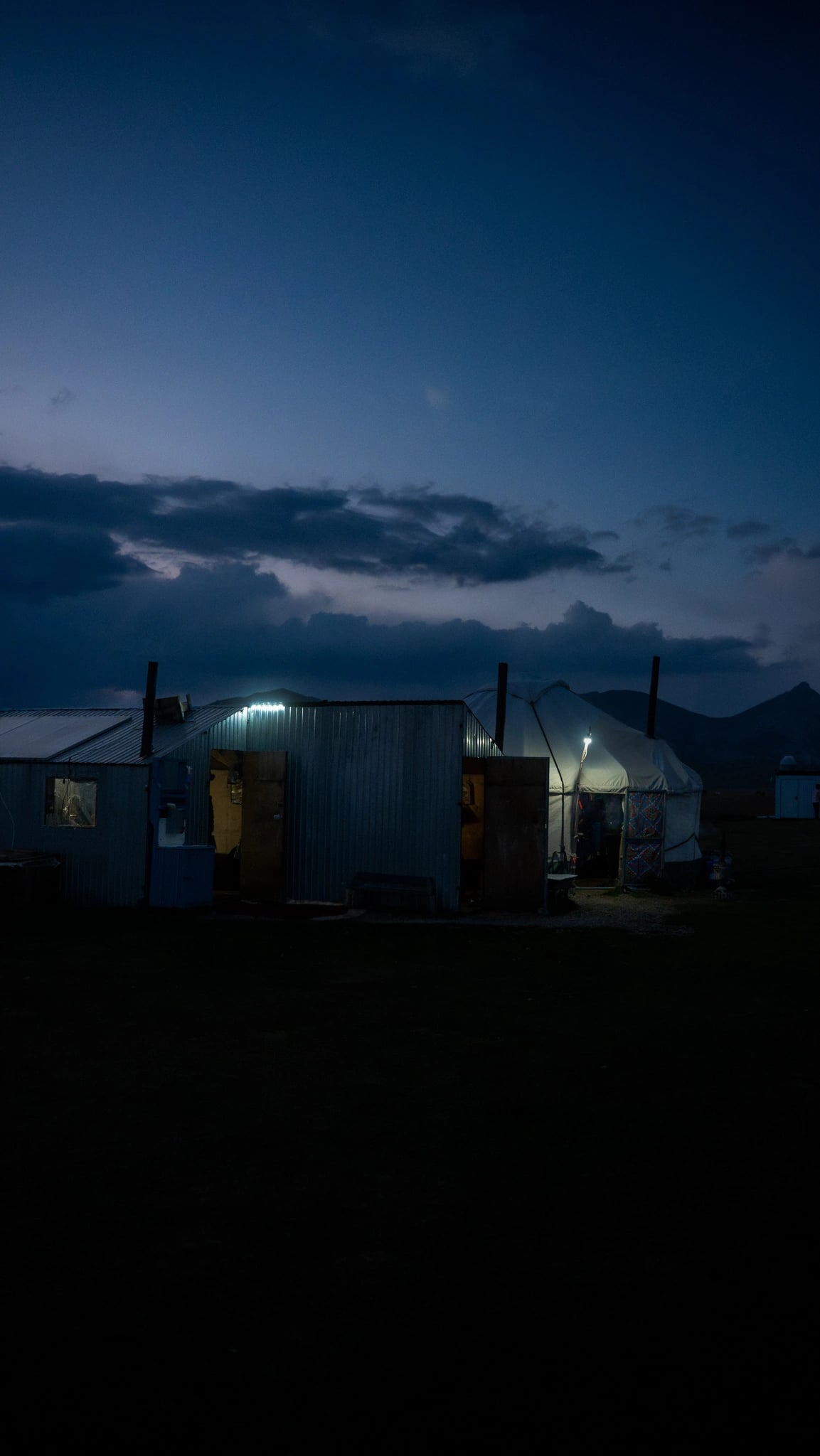
You sleep in a yurt, a portable, round tent that nomads have used for centuries. Our yurt had:

  • Mattresses on the floor with thick blankets
  • A central stove (lit in the evening)
  • Colorful wall decorations
  • No electricity (some yurts have solar panels for light)

The temperature: pleasant during the day (15-22°C), cold at night (5-10°C, can be lower). You sleep in layers, under multiple blankets. It's primitive and comfortable at the same time.

Why this stop is important

  • •Song-Kul is THE place to slow down and land in the country
  • •It's not a highlight to tick off. It's an experience to sink into

Duration

  • •Minimum 2 nights (1 night feels rushed)
  • •3 nights if you really want to relax

Recommended

  • •Arrive calmly (adjust to altitude)
  • •Short walk to the water
  • •First horse ride if you want to start
  • •Stargazing at night (no light pollution)

Avoid

  • •Too full planning on day 1
  • •Planning a long hike immediately
  • •Expecting to sleep well the first night (altitude + cold + new bed)

Day 3: Song-Kul (rest day)

My trip: August 4

A Day of Nothing

A full day at Song-Kul. No travel, no rush, no agenda.

This is the kind of day you'd never plan at home. No sight, no museum, no restaurant. Just: horses, wind, clouds sliding over the lake. The light that's different every hour.

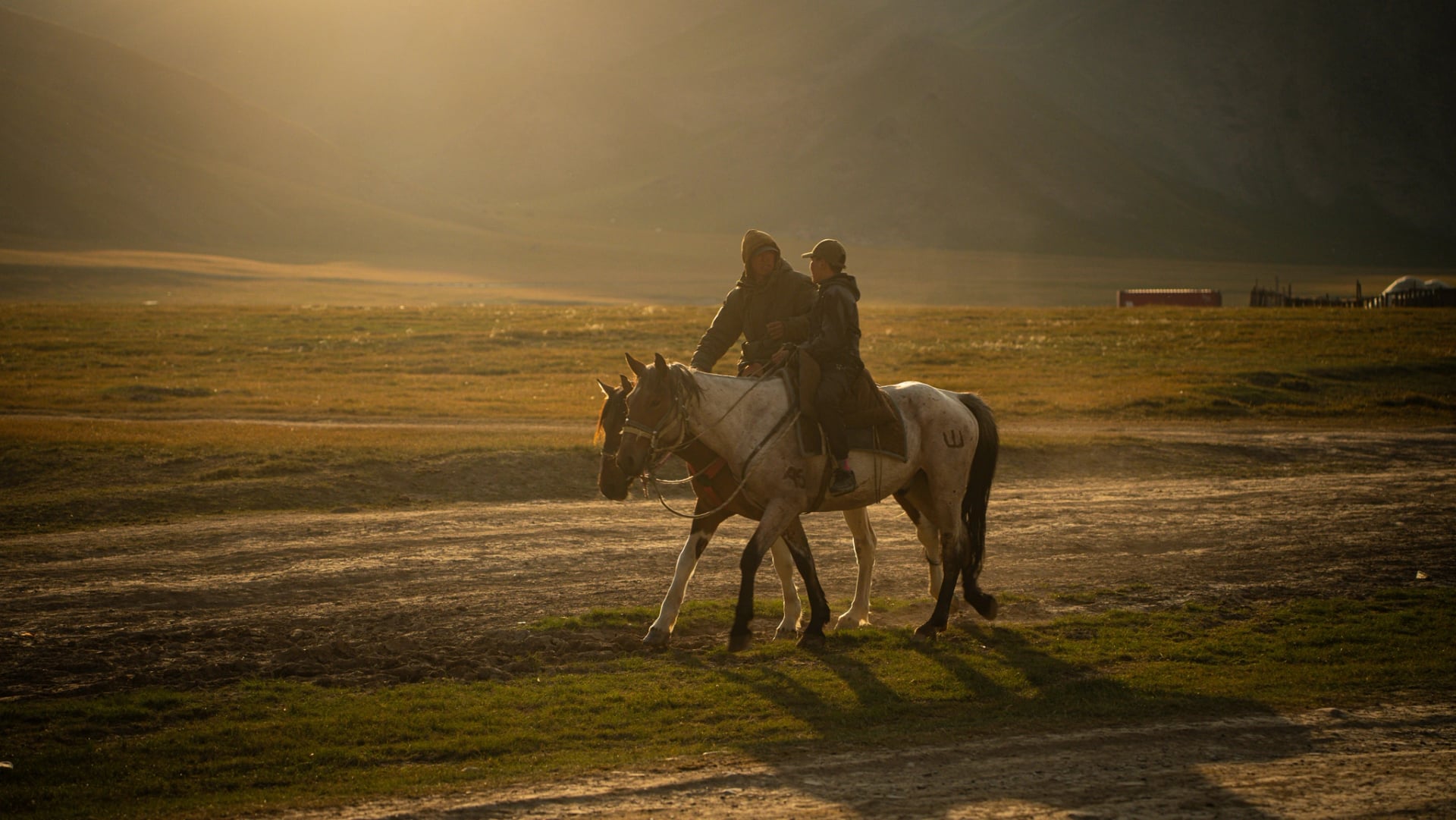
Horses grazing freely in the alpine meadows
White yurt in the alpine meadow
Traditional nomadic yurt against mountain landscape
Song-Kol
Horse Riding at Song-Kul

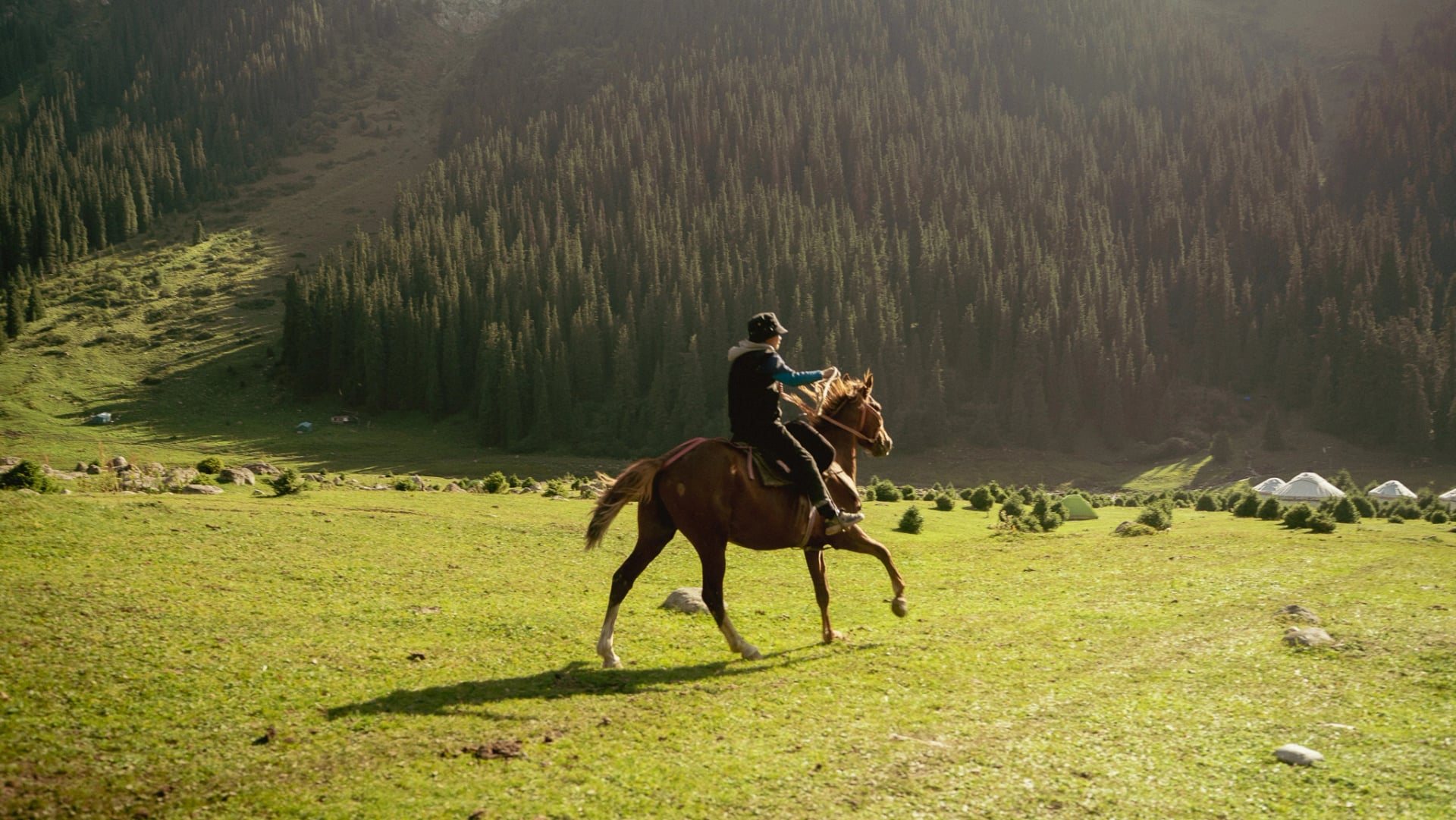
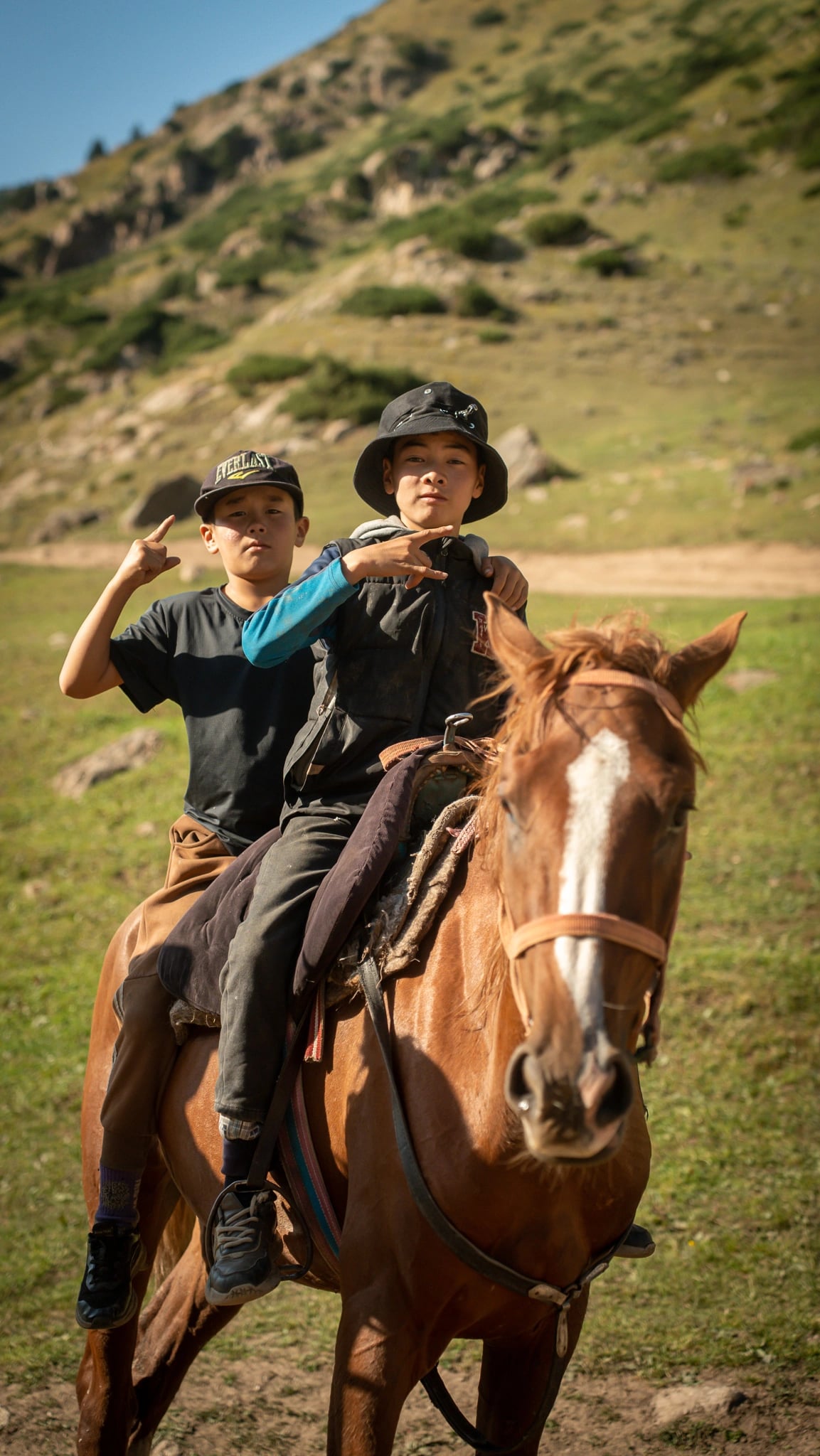
Horse riding here is different from back home. No helmet, no instruction, no marked trail. You get a horse, someone points a direction, and you go. The horses are calm and used to inexperienced riders.

Practical

  • •Cost: $10-20 for 1-2 hours
  • •Arrange: At your yurt or a neighbor
  • •Experience needed: No, really not
  • •Alone or with guide: Both possible
  • •Tip: Ask for a calm horse if you're unsure

You ride over hills, along the lake, through herds of sheep. Nobody checks on you. You're just, for a moment, part of this landscape.

The Rhythm of the Nomads

Observing what happens around you is part of the experience:

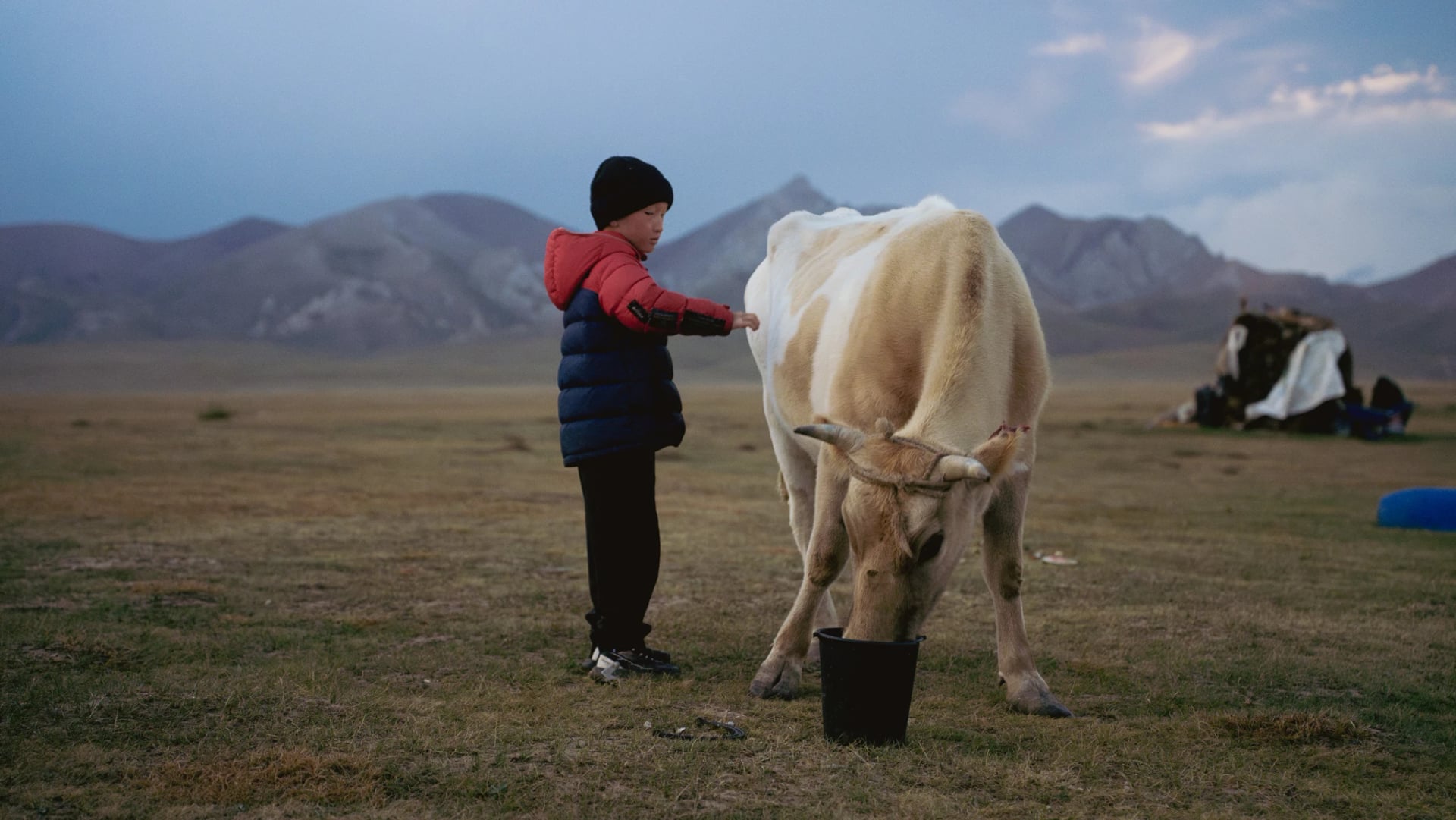
  • Women making cheese (kurut) drying in the sun
  • Men herding horses
  • Children playing outside without toys
  • The daily routine: milking, eating, rest, repeat

There's something restorative about watching a life so different from ours. Not better or worse, just different. Simpler in means, richer in some other things.

Recommended

  • •Horse riding (accessible, unique way to experience the landscape)
  • •Walking around the lake
  • •Just watching how the light changes
  • •Early to bed, early up. See the sunrise

Expectations

  • •Nights are cold. Layers aren't a luxury, they're a necessity.
  • •The food is simple: lots of bread, meat, potatoes
  • •Toilets are outdoor toilets (clean, but basic)
  • •Showering: not or very limited

Song-Kul is not a place you consume. It's a place you enter, and that lets you in.


Day 4: Song-Kul → Kel-Suu

My trip: August 5

The Journey to the Border

From the open plateau we drove further toward Kel-Suu, a remote lake in the border region with China. This is one of the most spectacular drives of the entire route. The landscape becomes rougher, the roads narrower, the villages sparser.

Somewhere along the way you realize you're really in remote territory. No shops, no gas stations, no phone signal. Just mountains, rivers and occasionally a herder with his flock.

Towering red cliffs rising from the lake
Dramatic canyon walls detail
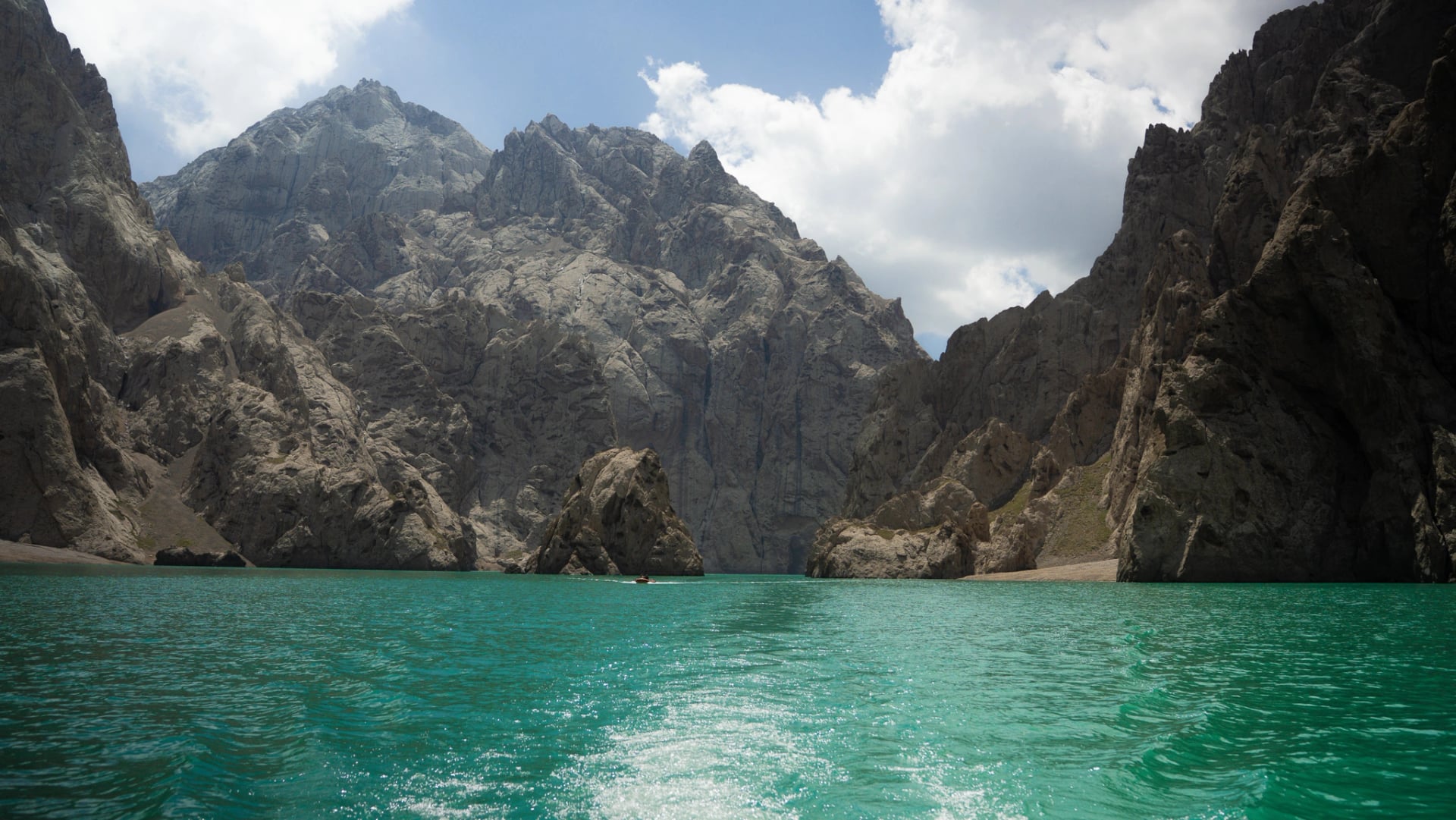
Crystal clear turquoise lake waters
Kel-Suu
Permit: What You Need to Know

Kel-Suu lies in a border zone and requires a border permit. This isn't complicated, but must be arranged in advance.

Practical

  • •Apply for permit via your guide/driver (2-3 days in advance)
  • •Cost: included with tour operator or ±$15-25 separately
  • •Pick up in Naryn or At-Bashy
  • •Bring passport for checkpoint

For us this was arranged by Anvar. We only had to pick it up. The process was smooth. Without a permit you won't get past the checkpoint.

Arrival

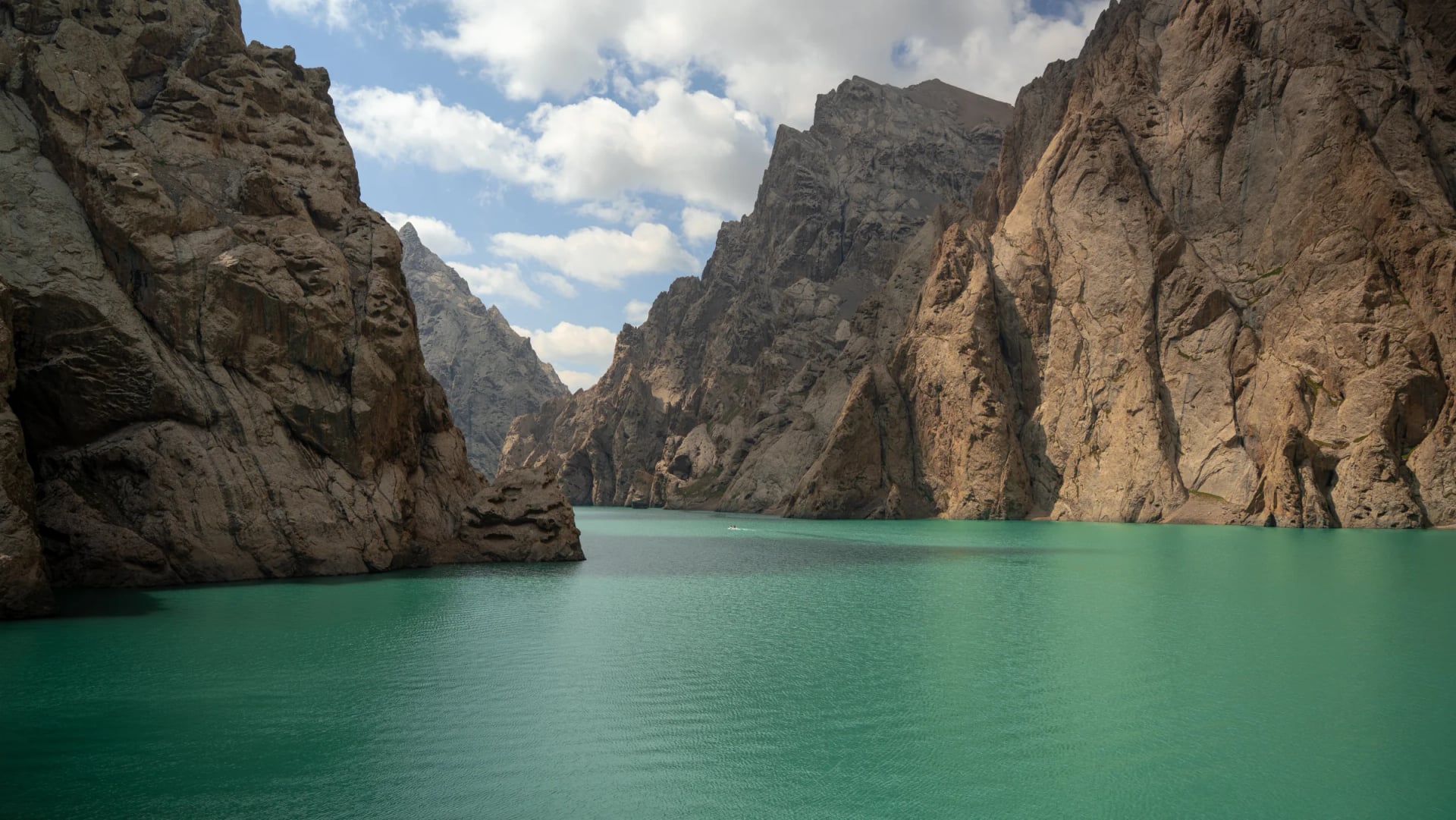
The last kilometers to Kel-Suu go via a kind of non-road through a riverbed. You understand why a normal car doesn't come here. And then, after a final bend, you see it: a narrow canyon that opens to turquoise water, surrounded by red rock walls.

The first reaction is often silence. It's hard to believe this is real.

Recommended

  • •Arrive, settle in, explore the surroundings
  • •Stay flexible with weather. It can turn quickly here
  • •Enjoy the isolation (no WiFi, no connectivity)

Avoid

  • •Trying to "squeeze" Kel-Suu into one day
  • •Planning arrival too late (you want to arrive in daylight)

Day 5: Kel-Suu (exploration day)

My trip: August 6

A Day at the Lake

A full day at Kel-Suu Lake. The light, the wind and the water change constantly. In the morning the lake is often mirror-smooth; by midday the wind can pick up and cause waves.

Turquoise glacial lake in dramatic red canyon
Detailed view of the canyon rock formations
Kel-Suu
Optional: Boat Trip

There's a local man with a boat who ferries tourists across the lake. This is not an organized tour. It's someone who lives here and offers a service.

Practical

  • •Cost: ±$50 per boat (not per person)
  • •Duration: 1-2 hours
  • •Arrange: on the spot, depending on weather and availability
  • •What you see: canyon from the water, different perspectives, possibly wildlife

The boat is a simple wooden vessel. No life jackets (take your own risk). But the experience, floating on that impossibly blue water, surrounded by those red walls, is unforgettable.

The Colors of Kel-Suu

What makes this lake so special? It's the combination:

  • The water: Glacier melt, so turquoise from fine rock powder
  • The rocks: Red and orange, iron oxide in the stone
  • The contrast: Those two colors next to each other are almost surreal
  • The scale: The canyon walls rise hundreds of meters high

Photographers can spend hours here. But even without a camera it's overwhelming.

Why an extra day

  • •This place is determined by weather and light. With time you get the real experience
  • •There's no rush here. Literally nowhere to go.

Recommended

  • •Walk along the lake (the shore is partly accessible)
  • •Boat trip in good weather
  • •Just sit and watch

Practical

  • •Little connectivity; don't count on internet
  • •Bring water/snacks in advance
  • •Basic accommodation: yurt or simple sleeping spot

Day 6: Kel-Suu → Tash Rabat

My trip: August 7

Along the Silk Road

We drove further to Tash Rabat, a historic caravanserai along the old Silk Road. The route goes through wide valleys and over passes. It's less spectacular than the drive to Kel-Suu, but more peaceful.

Along the way you pass small villages where life still largely revolves around livestock and agriculture. Children wave at the car. Old men sit in front of tea houses. Time has a different pace here.

Detailed view of the caravanserai stone architecture
Ancient architectural details
Stone fortress walls of the caravanserai
Tash-Rabat
Tash Rabat: Stone Inn

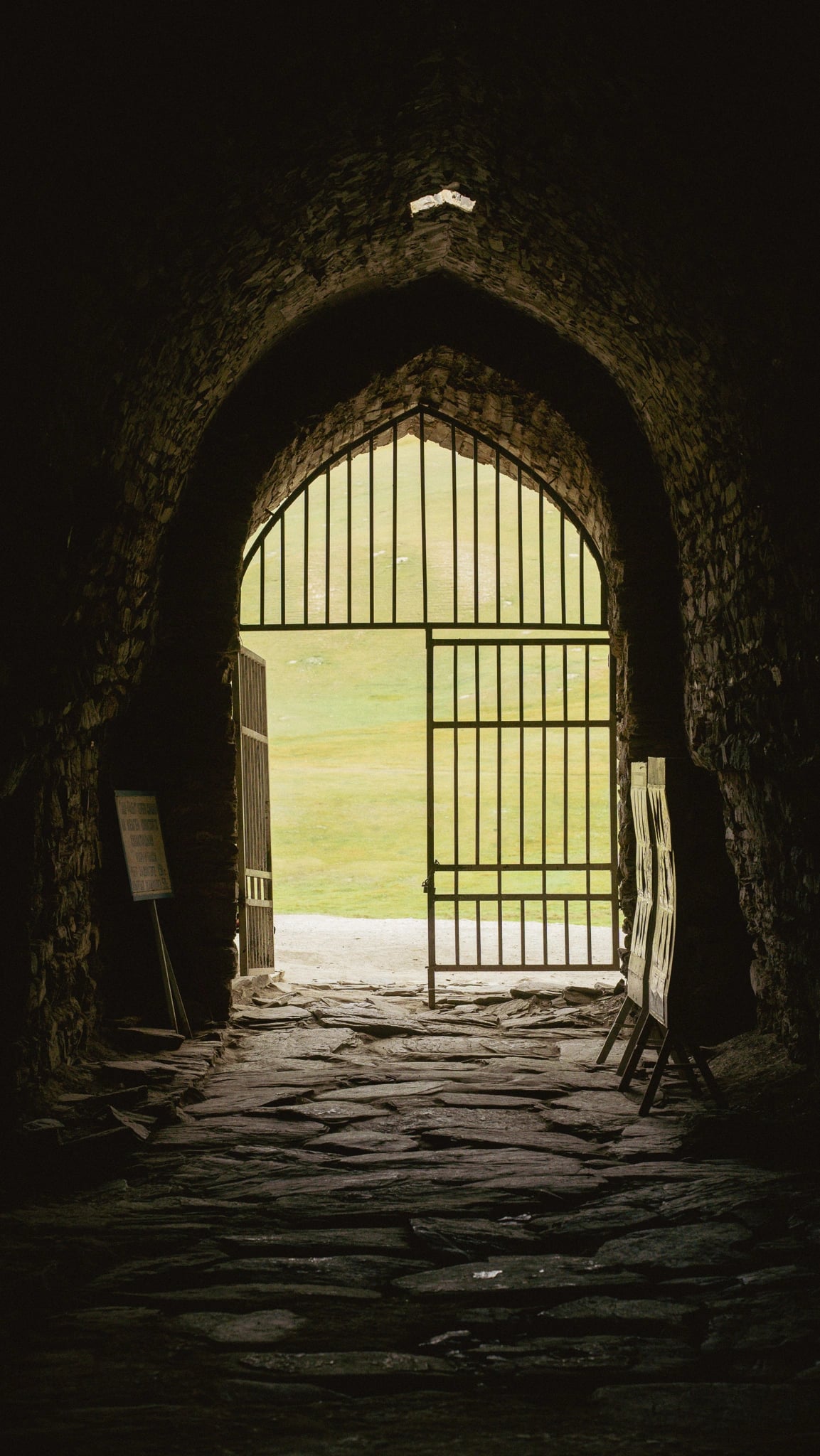
Tash Rabat is a 15th-century stone structure, hidden in a mountain valley. It was once a resting place for traders who traveled with their caravans between East and West: silk, spices, gemstones.

The architecture is impressive: thick stone walls, dome-shaped rooms, and a central hall that's still intact. You can go inside and explore the dark spaces. Bring a flashlight.

What you feel here

  • •The echo of footsteps in stone corridors
  • •The coolness after the warmth outside
  • •The knowledge that thousands of traders slept here, centuries before you
Staying at Tash Rabat

In the area there are yurts where you can stay overnight. The atmosphere is different from Song-Kul. Quieter, more remote, almost mystical. At night you only hear the wind and sometimes wolves in the distance.

Why this stop

  • •Historical rest point. Not an "attraction," but a place with weight.
  • •The combination of nature and history is unique.

Duration

  • •1 night is perfect
  • •More than 2 nights is probably too long (little to do)

Recommended

  • •Explore the caravanserai at different light conditions
  • •Short walk in the surrounding valley
  • •Early to bed, early up

Avoid

  • •Expecting this to be a museum experience (no explanation, no signage)
  • •Going into the dark rooms without a flashlight

Day 7: Tash Rabat → Bokonbaevo

My trip: August 8

Long Transfer Day

A long transfer day toward the south coast of Issyk-Kul. This is one of the longer driving days. Plan breaks and enjoy the landscapes along the way.

The route goes via wide valleys, along rivers and through villages. Along the way you can stop for:

  • Lunch at a local restaurant (laghman, manty)
  • ATM in Naryn (last chance for Kel-Suu area)
  • Simple groceries

We ended in Bokonbaevo, a village on the south side of Lake Issyk-Kul. This is not a tourist destination in itself, but a logical base.

Majestic golden eagle in mountain landscape
Bokonbaevo
Bokonbaevo: Eagle Hunters

Bokonbaevo is known for its eagle hunters, families who maintain the ancient tradition of hunting with golden eagles. This is not a show for tourists; it's a living tradition passed down from generation to generation.

You can book a demonstration via:

  • Your guide (recommended)
  • Directly with local families
  • Community Based Tourism (CBT) office

What you see

  • •The hunter in traditional clothing
  • •The interaction between human and bird
  • •Often a demonstration of the hunting technique
  • •The opportunity to hold the eagle on your arm yourself

This is not a circus act. The eagles are wild, the traditions serious. Approach with respect.

Why sleep here

  • •Logical base for the south side of Issyk-Kul
  • •Eagle hunter experience
  • •Close to Skazka Canyon and Jeti-Ögüz

Recommended

  • •Rest after long driving day
  • •Stock/ATM check (top up cash)
  • •Arrange eagle hunter demonstration for next morning

Avoid

  • •Treating this as a highlight; it's functional but with character

Day 8: Bokonbaevo → Skazka Canyon → Jeti-Ögüz

My trip: August 9

Skazka Canyon (Fairy Tale Canyon)

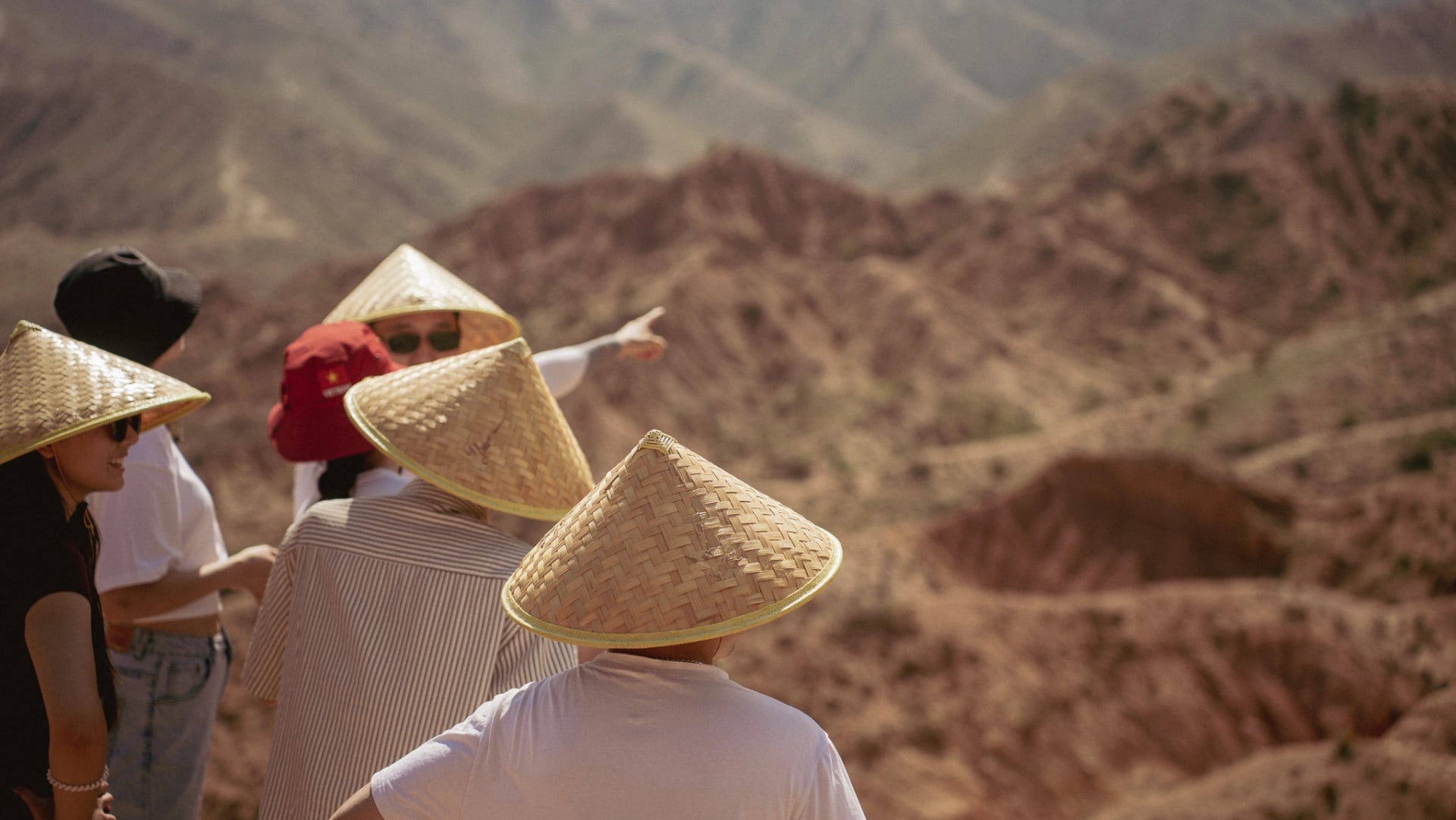
The day began at Skazka Canyon, a landscape of orange and red rock formations that looks like another planet. "Skazka" means fairy tale in Russian, and the name fits.

The rocks were formed over millions of years of erosion. The result: towers, waves and shapes reminiscent of castles, dragons, or whatever your imagination makes of it.

Intimate close-up of golden eagle
Eagle hunting demonstration in action
Preparing the eagle for demonstration
Bokonbaevo

Practical

  • •Entry: small amount (100-200 som)
  • •Time needed: 1-2 hours walking is enough
  • •Best light: early morning or late afternoon (less harsh, warmer colors)
  • •Footwear: regular shoes are fine

The afternoon we spent at Jeti-Ögüz, red rock formations nicknamed "Seven Bulls." Less surreal than Skazka, but impressive in scale. You can also take short walks here.

Skazka: best time

  • •Morning or late afternoon (the light is everything)

Duration

  • •Skazka: 1–2 hours is enough
  • •Jeti-Ögüz: 1 hour unless you want to hike

Jeti-Ögüz

  • •Red rock formations ("Seven Bulls")
  • •Short hikes possible
  • •Visually strong transition toward Karakol region
  • •Fewer visitors than Skazka

Avoid

  • •Skazka in the middle of the day (harsh light + hot)
  • •Staying too long here. It's a stopover, not a destination

Day 9: Jeti-Ögüz → Karakol → Altyn Arashan

My trip: August 10

Karakol: Last Town

Via Karakol, the last real town before the mountains, we drove on to Altyn Arashan. In Karakol it's smart to:

  • Withdraw cash (last ATM for days)
  • Do shopping (snacks, water)
  • Have lunch (good restaurants available)
  • Possibly buy/rent gear
The Road to Altyn Arashan

In Karakol we switched from car to UAZ, a Russian 4x4 that looks like it came out of a war movie, but is designed for exactly these kinds of roads.

Snow-capped peaks surrounding the valley
Altyn-Arashan

The drive to Altyn Arashan takes 2-3 hours for 30 kilometers. That says everything about the road: unpaved, steep, full of potholes and river crossings. A normal car doesn't come here. The UAZ shakes, bumps and climbs. And somehow that's part of the experience.

Important (UAZ)

  • •In Karakol you switch from normal car to UAZ
  • •UAZ was arranged for us by Anvar
  • •For Altyn Arashan this is practically necessary
  • •Cost: ±$100-150 return for the UAZ
Arrival in the Valley

Altyn Arashan means "Golden Spring," named after the hot springs that emerge from the mountains here. The valley lies at 2600 meters, surrounded by coniferous forests and alpine meadows.

After the rough ride, arrival here is a relief. The air is fresh, the river water crystal clear, and the mountains around tower high.

Duration

  • •Minimum 2 nights (the journey here deserves rest afterward)
  • •3 nights if you want to hike to Ala-Kol lake

Recommended

  • •Arrive and settle in
  • •Hot springs (same evening or next day)
  • •No rush

Avoid

  • •Planning this as a day trip (too tiring, too little time)
  • •Immediately doing a long hike after the UAZ ride

Day 10: Altyn Arashan (rest day)

My trip: August 11

The Hot Springs

A full day in the valley. The main goal: the hot springs.

There are various baths, from rustic wooden huts to open pools. The water is warm (35-40°C), mineral-rich, and supposedly good for muscles and skin. After days of traveling, driving and walking, this is exactly what your body needs.

Dramatic mountain vista from valley
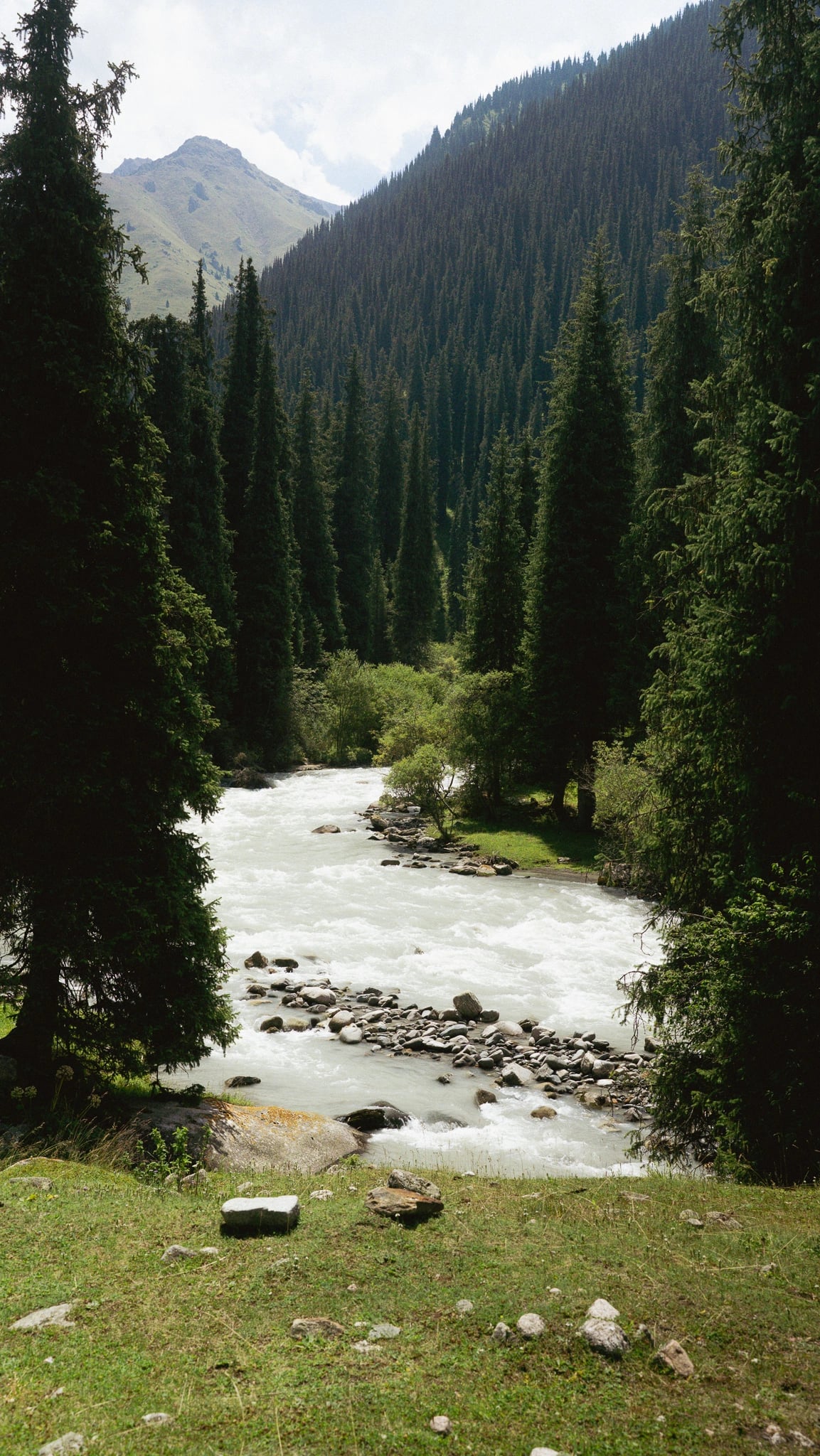
River flowing through the alpine valley
Altyn-Arashan

Practical

  • •Cost: 100-300 som per session
  • •Separated baths (men/women) or mixed, depending on the place
  • •Bring swimwear and towel
  • •Best moment: early in the morning or evening (less crowded)
Hiking in the Valley

For the more active: there are various hikes possible.

  • Short loop: Along the river, through the forest (1-2 hours)
  • Medium: To a waterfall further in the valley (3-4 hours)
  • Long: To Ala-Kol lake (whole day, heavy, beautiful)

We chose short. The focus was on recovery, not on performance.

Simple Living

Altyn Arashan is not luxury. You sleep in a simple guesthouse or yurt. The food is basic. There's no WiFi (sometimes Starlink at newer places). And yet, or perhaps because of that, it's one of the most restorative places on the route.

Recommended

  • •Hot springs (multiple times if you want)
  • •Short walk
  • •Sleeping, reading, doing nothing
  • •Stargazing at night

Expectations

  • •Little connectivity
  • •Simple food (but good and warm)
  • •Cold nights
  • •Outdoor toilets

Some places heal you not despite their simplicity, but because of it.


Day 11: Altyn Arashan → Karakol

My trip: August 12

Back to the Inhabited World

The UAZ ride back to Karakol feels shorter than the way there. You know what to expect. In Karakol we take the afternoon and evening to recover.

Wide beach panorama along the pristine shoreline
Cholpon-Ata
Karakol: What to Do

Karakol is small but pleasant. Some options:

  • Dungan Mosque - Wooden mosque built without nails, with Chinese architecture
  • Russian Orthodox Cathedral - Also entirely of wood, impressive structure
  • Karakol Bazaar - Local market, good for fruit and snacks
  • Restaurants - Western options available (pizza, pasta) if you're ready for variety
Rest and Recovery

This is a functional day. Not every moment needs to be epic. After a week of yurts, mountains and limited facilities, a night in a real bed with a hot shower is welcome.

Function

  • •Rest day: eat, withdraw cash, recharge (literally and figuratively)

Recommended

  • •Top up cash
  • •Eat well
  • •Do laundry (possible at some guesthouses)
  • •Plan next steps with driver

Day 12: Karakol → Grigoriev Gorge → Cholpon-Ata

My trip: August 13

The North Coast of Issyk-Kul

We drove along the north coast of Issyk-Kul, with a stop at Grigoriev Gorge along the way. This is a green gorge with alpine meadows, waterfalls and shade. A pleasant change after the drier landscapes of the south side.

Crystal clear turquoise waters of Issyk-Kul
Mountain peaks reflected in calm waters
Alpine lake with snow-capped peaks
Cholpon-Ata
Grigoriev Gorge

A short stop (1-2 hours) is enough to walk, take photos and taste the atmosphere. It's less spectacular than the big highlights, but calming and beautiful.

Cholpon-Ata

We ended in Cholpon-Ata, the largest town on the north coast of Issyk-Kul. This is the "more touristy" part of the lake. Beaches, resorts, restaurants. After almost two weeks in the mountains it feels almost decadent.

Options

  • •Beach - Yes, really. Swimming in the lake is possible (cold but refreshing)
  • •Petroglyphs - Open-air museum with rock drawings over 1000 years old
  • •Restaurants - More choice than elsewhere on the route

This is a good place to wind down the trip peacefully.

Grigoriev Gorge

  • •Greener, more shade than the rest of the route
  • •Perfect for a short stop along the way

Cholpon-Ata

  • •Logical last overnight stay (facilities + route toward Bishkek)
  • •Possibility to swim
  • •More comfort available

Day 13: Cholpon-Ata → Bishkek

My trip: August 14

The Last Ride

The route back to Bishkek follows the north coast of Issyk-Kul and then goes via the Boom Gorge, a spectacular gorge with red rock walls along the river. It's a worthy ending.

Ala-Too Square with State Museum and mountains
Bishkek
Ala-Too Square met bergen op achtergrond

Along the way you can stop at:

  • Burana Tower - 11th-century minaret, remnant of an ancient city
  • Local restaurants - Last chance for authentic Kyrgyz food
Bishkek: Closure

Arrival in Bishkek in the afternoon. The city feels different now than on arrival. You see it with different eyes after two weeks in the mountains.

Evening ideas

  • •Osh Bazaar (if you haven't been yet)
  • •Good restaurant (Navat, Supara, or simpler)
  • •Walk through the center
  • •Early to bed if your flight leaves early

Recommended

  • •Final preparations for departure
  • •Buy souvenirs (honey, felt products, dried fruits)
  • •Rest and reflect

Day 14: Departure (morning)

My trip: August 15

Departure from Bishkek in the morning.

The farewell from a country like Kyrgyzstan is strange. You don't take photos with you, not really. You take a feeling with you, of space, of silence, of a rhythm you had forgotten.


Practical Guide

Practical Guide

Adjust route for your timing

7
Highlights

7 days

Bishkek → Song-Kul (2N) → Karakol → Altyn Arashan (2N) → Bishkek
Focus: Song-Kul + Altyn Arashan, the two most unique experiences
Best for: Limited time but want the essence
10
Short but complete

10 days

Bishkek → Song-Kul (2N) → Karakol → Altyn Arashan (2N) → Jeti-Ögüz → Cholpon-Ata → Bishkek
Focus: Highland + mountain valley experience
Best for: First time Kyrgyzstan, limited vacation days
20+
Extended exploration

20+ days

Full 14-day route + additions
Focus: Arslanbob, Osh Valley, Sary-Chelek, multi-day horse trek
Best for: Off-the-beaten-path explorers

Based on recommendations from local guides

Adjust route for your timing

7
Highlights

7 days

Bishkek → Song-Kul (2N) → Karakol → Altyn Arashan (2N) → Bishkek
Focus: Song-Kul + Altyn Arashan, the two most unique experiences
Best for: Limited time but want the essence
10
Short but complete

10 days

Bishkek → Song-Kul (2N) → Karakol → Altyn Arashan (2N) → Jeti-Ögüz → Cholpon-Ata → Bishkek
Focus: Highland + mountain valley experience
Best for: First time Kyrgyzstan, limited vacation days
20+
Extended exploration

20+ days

Full 14-day route + additions
Focus: Arslanbob, Osh Valley, Sary-Chelek, multi-day horse trek
Best for: Off-the-beaten-path explorers

Based on recommendations from local guides


Reflections: What I Learned

Planning

I went to Kyrgyzstan with a route, a schedule, and expectations. The route stayed roughly intact. The schedule became looser by the day. The expectations were replaced by something else. Not better or worse, but more real.

1

The best days were not the days I had planned. They were the days that emerged.

Comfort

There's a limit to how long I want to sleep on a mattress on the floor, in the cold, without WiFi. That limit is higher than I thought. After a week I adapt. After two weeks I feel at home.

2

Comfort is relative. And often less necessary than we think.

Time

At home I think in hours and deadlines. Here I thought in daylight and seasons. In the morning the light is soft, so you do things. In the evening it's dark, so you stop. Simple. Effective.

3

The modern rhythm is not the only rhythm.

Connection

Without WiFi you don't wander off. Without notifications you stay present. Without constant input, space emerges for thoughts that otherwise wouldn't be there.

4

What we lose without connection is less than what we gain.

Hospitality

People who have less materially than I do gave me more than I could give them. Food, tea, their best sleeping spot, their time, their stories. Without expecting anything in return.

5

Hospitality is not a transaction. It's a way of living.

Visual Highlights

A curated selection from the journey

I share all my travel photos and stories on Instagram. Follow along for daily highlights and behind-the-scenes moments from this adventure.

Loading...

More Photos

Interested in seeing more? Visit my photography section for full galleries with technical details and stories behind each shot.


Closing

Kyrgyzstan doesn't ask for a strict schedule. It asks for time, trust and room to move.

If you're willing to let go of plans, you'll find that the country gives you more than you seek. Not what you expected, but what you needed.

The mountains keep standing. The nomads keep moving. The light keeps changing. And you, if you're lucky, take a piece of that peace home with you.

"In the mountains you learn what you can't take with you. And what you'll never lose."


Questions about this route or need help planning? Send a message via the contact form.

Trip Overview

Best Season
Jun–Sep
August = peak season
Budget
€1200–1800
Per person, excl. flights
Transport
Car + driver
Highly recommended
Duration
14 days
7–20 days possible
Permits
Kel-Suu
Border permit required
Difficulty
Easy–Moderate
Flexibility required

Pro Tip

Cash is king. Withdraw before entering remote areas, as ATMs are scarce outside cities.

From my photography collection

Photos from: Kel-Suu, Tash-Rabat, Cholpon-Ata, Bokonbaevo, Altyn-Arashan, Bishkek, Osh, Song-Kol

View full gallery
Turquoise glacial lake in dramatic red canyon

Kel-Suu

Detailed view of the canyon rock formations

Kel-Suu

Wide canyon vista with red rock formations

Kel-Suu

Ancient Tash-Rabat caravanserai in mountain valley

Tash-Rabat

Detailed view of the caravanserai stone architecture

Tash-Rabat

Ancient architectural details

Tash-Rabat

Explore more of my travel photography

Travel stories in your inbox

Get notified when I publish new field notes, photo essays, and behind-the-scenes content from my expeditions.

No spam, ever. Unsubscribe anytime.

Kyrgyzstan: 14-Day Roadtrip | Kyrgyzstan | Musab | Musab